

Pre-Grooming Checklist: What to Do Before You Start
Before you groom a dog, five things should happen in this order: brush the coat out completely, do a quick nose-to-tail check, look at the nails, get every tool charged and within arm's reach, and give your dog a few calm minutes to settle. The one rule that matters most: brush before any water touches the coat. Bathing a matted dog pulls the tangles tighter and makes them far harder to remove. Everything else on this checklist exists to make the session shorter, safer, and less stressful — for both of you.
The Pre-Grooming Checklist at a Glance
| Step | What to do | Why it matters |
|---|---|---|
| 1. Brush out | Full brush-through, down to the skin | Water tightens mats — brushing after a bath is twice the fight |
| 2. Nose-to-tail check | Look at skin, ears, eyes, paws, nails | Catches sores and tender spots before the clippers find them |
| 3. Nails | Trim or book a trim if you hear clicking on the floor | Long nails make dogs shift and squirm on the table |
| 4. Tools | Charge clippers, lay out brushes, combs, towels | Walking away mid-groom teaches your dog that escape works |
| 5. Your dog | A short handling warm-up with treats | A relaxed dog stands still; a startled one remembers |
Print it, screenshot it, tape it inside the cabinet where you keep the shampoo. The order is the point.
1. Brush Out the Coat — Always Before Water
Start at the shoulders and work back, brushing all the way down to the skin rather than skating over the surface. Surface strokes make a coat look tidy while the undercoat quietly felts underneath. The American Kennel Club recommends brushing to the skin so the massaging action stimulates circulation and lifts loose dander along with the dead hair.
When you hit a tangle, work it apart from the tip of the hair toward the root, holding the base of the mat so you're not pulling on skin. Never yank. If a mat won't give, it's a job for clippers or a groomer — not for force.
A slicker brush with rounded pin tips makes this step much kinder. The Fido Fave Self-Cleaning Slicker Brush uses 220 rounded stainless steel pins, 0.5 inch (1.3 cm) long, designed to reach through short and medium coats without scratching. When the pad fills with hair, one click retracts the pins and the whole mat of fluff lifts away — so you keep brushing instead of stopping to pick hair out of the bristles.
2. Do a Quick Nose-to-Tail Check
Two minutes, hands on. Run your fingers against the lie of the coat and look for flaky patches, redness, scabs, or anything your dog flinches away from. Peek inside the ears — they should look clean and have no strong smell. Check between the paw pads for trapped grit or matted fur.
And listen for the nails. The AKC's rule of thumb is simple: if you can hear the nails clicking on the floor, they're too long. Overgrown nails change how a dog stands, and a dog standing awkwardly will not hold still for grooming.
This check isn't just about health. Clipping over a sore spot you didn't know existed is exactly how a dog learns to dread the grooming table. If you find something that looks angry or painful, groom around it and ask your vet before the next session.
3. Get Your Tools Ready Before the Dog Is in the Room
Nothing unravels a grooming session like leaving a wet, half-brushed dog to go hunting for the comb. Lay everything out first: brush, comb, towels, shampoo, nail trimmer, and — if you're trimming — clippers, charged.
Charge the night before. The Fido Fave 4-Speed Grooming Clippers show battery level on an LCD screen, so you can confirm a full charge before you start; a full charge is designed to run 3–4 hours, which covers several sessions. Pick your guard comb now, too — the kit includes four, from 1/8 inch (3 mm) up to 1/2 inch (13 mm) — and add a drop of blade oil so the blade runs cool.
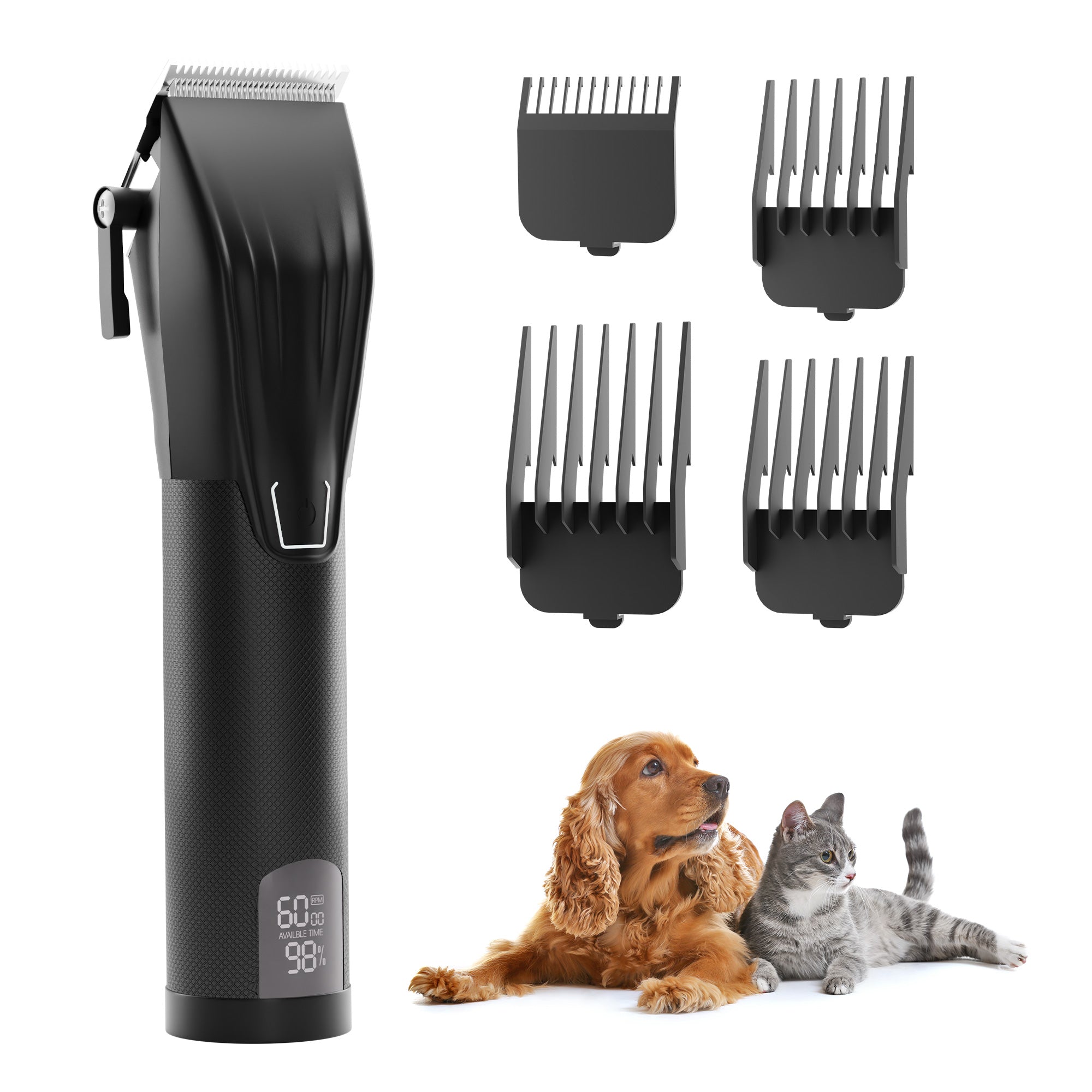
One more thing worth doing days ahead: let your dog hear the clipper motor while nothing happens. Switch it on across the room, drop a treat, switch it off. The lowest of the four speeds is the quietest place to start when the trimming actually begins.
4. Set Up the Space
Pick a spot with good light and no slippery footing — a rubber bath mat or a folded towel on the table changes everything for a nervous dog. Keep the room quiet: no vacuum running, no kids charging through.
If a bath is part of the plan, use warm (not hot) water and tuck a cotton ball loosely at the opening of each ear to keep water out, a trick the AKC recommends. Have two towels within reach, because one is never enough. It just isn't.
5. Warm Up Your Dog, Not Just the Water
The best pre-grooming step doesn't look like grooming at all. The AKC's advice for dogs that struggle with handling is to build the association slowly — touch a paw and give a treat, hold the paw a beat longer before the next one, then lift an ear, look inside, and treat again. Keep it short and frequent — a few minutes, not a marathon — starting with the spots your dog tolerates best and saving paws and ears for last.
Timing helps as much as technique. A dog fresh off a walk, sniffed-out and a little tired, settles onto the grooming mat far more easily than one mid-zoomies. Give your dog a few minutes to settle in the room with you before the first stroke of the brush.
None of this is wasted time. A dog that steps onto the mat relaxed is the difference between a fifteen-minute brush-out and a wrestling match.
Frequently Asked Questions
Q: How long before a bath should I brush my dog?
A: Right before — same session, not the day before. The goal is a completely tangle-free coat at the moment water hits it, because wet mats shrink tight and become much harder to work out. A brush-through immediately before the bath also strips out loose hair that would otherwise end up in your drain.
Q: Should I clip before or after the bath?
A: For most clipper work, bathe first, dry thoroughly, and brush the coat smooth before you trim. A clean, fully dry, tangle-free coat cuts evenly and is easier on the blade. Clipping a dirty or damp coat drags, snags, and leaves an uneven finish.
Q: What if my dog hates being handled?
A: Shrink the steps. Touch the brush to the shoulder, treat, done — that can be the whole first session. The AKC recommends short, frequent handling sessions that pair touch with treats and praise, starting with areas your dog accepts and working gradually toward paws, ears, and tail. Days of two-minute sessions beat one forced hour.
Q: Does this checklist work for cats too?
A: Most of it. The brush-out, the nose-to-tail check, and the handling warm-up apply to cats exactly as written — and a slicker with rounded pins suits both species. The bath step usually doesn't: most cats keep themselves clean and only need bathing when they've gotten into something they can't safely lick off.
Sources
- American Kennel Club — How to Groom a Dog at Home (https://www.akc.org/expert-advice/health/how-to-groom-a-dog/)
- American Kennel Club — Teach Your Dog to Enjoy Grooming (https://www.akc.org/expert-advice/health/teaching-dog-enjoy-grooming/)
Step one on this list exists because of where mats form first — see the science of where mats start.